Political Science glossary
This glossary was mainly made for the purpose of learning definitions of terms related to Political Science field. Most of the definitions come from an online dictionary provided by Oxford Languages. Each term is followed by a pronunciation, a definition, an image from Wikimedia, a French translation, and an example sentence.
- activist
- noun
- A person that actively tries to achieve social or political change by joining (often ) an activist group.
- Example: Liz is an environmental activist for Greenpeace Canada.
- fr: activiste

- autocracy
- noun
- A system of government by one person with absolute power.
- Example: The autocracy of Adolf Hitler in Germany from 1933 to 1945 was horrific, everyone needed to follow his orders.
- fr: autocratie
- ballot
- noun
- A vote usually done in secret, or the system for voting.
- Example: The next president of the United States will be elected by ballot.
- fr: scrutin/ bulletin de vote

- biased
- adjective
- Having an unfair preference for someone or something based on personal opinions.
- Example: This media present the Israeli-Palestinian conflict in a biased way.
- fr: biaisé

- bureaucracy
- noun
- A hierarchy of officials who administer an organisation or a government department.
- Example: The structure of bureaucracy changed over the years.
- fr: bureaucratie
- cabinet
- noun
- A body composed of the main members of a government, who represents the executive power.
- Example: The cabinet secretary is supposed to make an announcement in the press conference tomorrow.
- fr: cabinet

- caucus
- noun
- A meeting of supporters or members of a specific political party or movement.
- Example: Quebec solidaire caucus swore an oath to King Charles III against their will.
- fr: caucus

- democracy
- noun
- Political system in which all citizens and eligible representatives members chosen through election participate in public decisions.
- Example: The system of government in Canada is a constitutional monarchy and a parliamentary democracy.
- fr: démocratie

- diplomacy
- noun
- The managing of relations and communication between countries to ensure peace between nations, groups, or individuals. People who practice diplomacy are called diplomats.
- Example: The government avoided a war by successfully resolving the issues through diplomacy.
- fr: diplomatie

- draconian
- adjective
- Extremely strict and severe (about a law, punishment or application).
- Example: The governor proposed draconian cuts in state aid to education.
- fr: draconien/ne
- fascism
- noun
- An authoritarian far-right political system with a totalitarian ideology, characterized by a dictatorial militarism leader, with belief in a racial supremacy and where there's no opposition.
- Example: People around the world fear the return of fascism one day.
- fr: fascisme
- geopolitics
- noun
- The study of the effects of Earth's geography resources and territories on politics and international relations.
- Example: Water resources are an important key in geopolitics that can cause conflicts.
- fr: géopolitique

- human rights
- noun
- Coming from the political, legal and philosophical concept where every human has rights to be treated fairly without cruelty or injustice.
- Example: Human rights are often violated during wars such as in Congo.
- fr: droits humains

- ideology
- noun
- A particular set of ideas and beliefs, especially one on which a political system, party, or organization is based.
- Example: Neo-liberalism is an ideology based on the theory that natural market forces of supply and demand create an optimal distribution of resources within society.
- fr: idéologie

- Nation-state
- noun
- A particular type of state in which citizens are assumed to belong in their majority to the same nation or where individuals are relatively homogeneous in factors such as language, culture, religion, or ethnicity.
- Example: Japan is a nation-state because it's a sovereign nation-state with a population that is fairly homogeneous, most of its people share the same ethnicity and ancestry.
- fr: État-nation

- Political corruption
- noun
- The abuse of power by elected government officials for personal gain, by extortion, soliciting or offering bribes.
- Example: I heard that the ex-Laval mayor Vaillancourt was accused of political corruption and fraud.
- fr: corruption politique

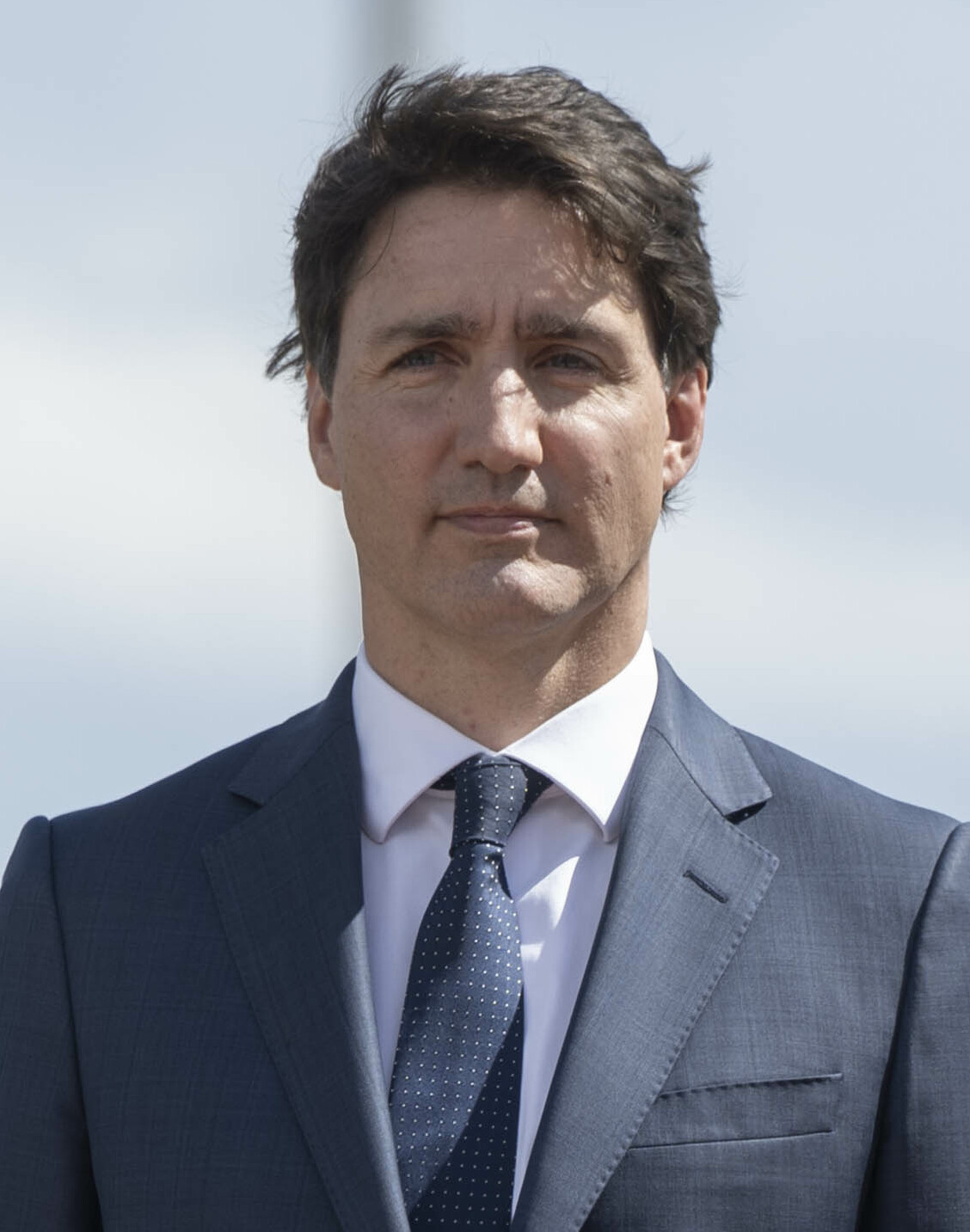
- prime minister
- noun
- The leader of the government of a country with a parliamentary system that is either a constitutional monarchy or a republic.
- Example: Justin Trudeau is Canada's 23rd Prime Minister.
- fr: premier ministre
- referendum
- noun
- An event in which the people of a county, state, etc., vote for or against a law that deals with a specific issue.
- Example: The Quebec sovereignty referendum in 1995 was rejected.
- fr: référendum

- Senate
- noun
- A deliberative assembly, often the upper house or chamber of a bicameral legislature.
- Example: Legislation has to be passed by the senate before it becomes law.
- fr: Sénat

- veto
- verb/noun
- The act of using a legal power or the right to refuse/allow a law, or resolution.
- Example: In some countries the head of state can veto legislation.
- fr: véto